
Stepping up to a craps table can feel like walking into a busy race day at the tracks, all noise and motion. The game has ancient roots too – historians point to a board game called Senet from Ancient Egypt that may have involved betting – but modern craps is about pace and choice, not luck alone. Here is a calm way to read the table, pick your spots, and decide where your money goes before the dice roll.
Read the table layout before you place a chip
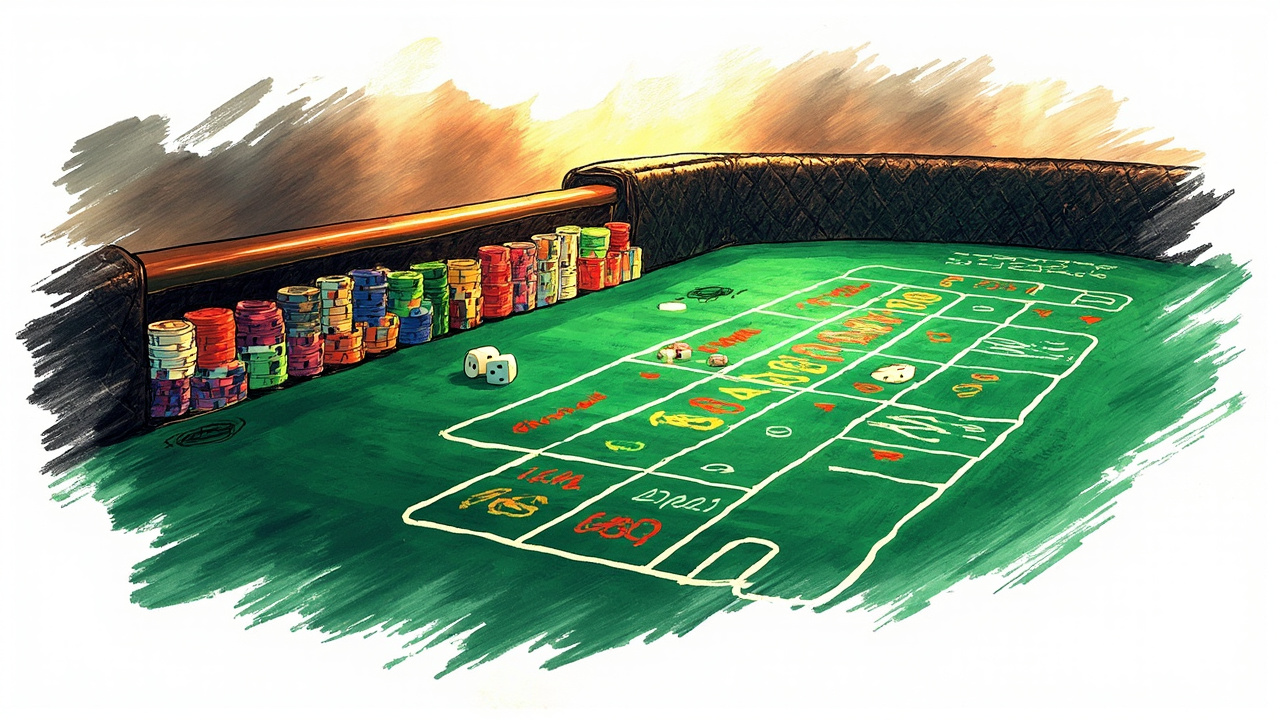
Begin with the simplest wagers and ignore the crowded centre of the table until you know what each box pays. The pass line and don’t pass line are the clearest entry points because they resolve on a single come-out roll or after a point is set, and the house edge stays modest compared with the prop bets ringing the layout. If you are watching the pace of a Hobart casino floor on a Saturday arvo, you will notice dealers moving steadily and players clustering around the high-action props, which is exactly where the odds tilt hardest against a newcomer. Sound and light wins on modern displays reinforce play even on net-losing spins, so treat the flashing screens as atmosphere rather than a signal to chase. I have built multilingual service teams from a handful of agents to thousands of seats across regulated markets, and the same discipline applies here: map the table before you commit cash, because a clear layout saves more money than a lucky streak ever will.
Decide what kind of roll you are actually buying
Each wager is a separate decision about how much volatility you are willing to take on for the next roll. A pass line bet with a small odds stake behind it gives you a steadier path, while the proposition bets pay faster but carry a much steeper edge and resolve in a single throw. Industry claims about “smart play” often blur the maths, so I treat those as marketing language rather than a strategy – the verifiable fact is that the house edge on centre-table props is materially higher than on the line bets, and that difference compounds over a session. You can read more about the core dice, wagers and probabilities in a plain-language breakdown of craps rules for beginners if you want the numbers in one place. My experience running regulated operations across languages and jurisdictions is that players who name their risk before they sit down stay longer and lose less, because they are choosing a market, not reacting to a roll.
Keep your betting rhythm tied to your session plan
Decide your bankroll and your exit before the first die leaves the stickman’s hand, then treat the table like a timed session rather than an open-ended run. Staking a fixed amount per resolution and stepping back after a set number of rolls keeps the game from drifting into a chase, and that discipline matters more than any tip sheet you read online. If you want a short spin of something different between craps rounds, you can find a royal reels $10 offer at chestercheetahs.com, though I would treat any bonus as a separate product with its own terms rather than free money attached to the table. In my years scaling customer operations for regulated markets, I have seen the same pattern repeat: the sessions that stay calm are the ones with a pre-agreed stop, not the ones where a hot streak convinces a player to re-enter the fray. Lachlan Patel, Head of Analytics, Australian Gaming Futures, puts the point plainly: “The players who last are the ones who decide their limits before they walk up, not after a lucky run.”
When the session closes, log the outcome and compare it against your original plan so you can spot where emotions started to override the math. If you want a straightforward reminder of why that routine pays off, the breakdown at royal reels $10 shows how consistent limits turn random variance into a manageable session. Treat each reset the same way, and you will keep the game from becoming a test of endurance.
Weigh the table, the pace and your own limits
Choosing a table is less about finding a mythical edge and more about matching the game to your temperament and your time. A slower table with clearer dealers and fewer prop bets suits a beginner who wants to watch the mechanics, while a louder, faster floor may suit someone who already knows the come-out and point phases by heart. Ava Jackson, Strategy Director, Red Centre Analytics, notes that pace is the variable most players overlook: “A table that moves too quickly for your reading speed will cost you more in missed decisions than any single bad roll.” If you are weighing a session in Hobart against a quieter weekday visit, the difference in crowd and pace can matter as much as the stakes on the felt, so pick the environment that lets you think rather than the one that simply looks busy. The nags and the gee-gees may draw a crowd at the races, but at the craps table the quiet decisions are the ones that hold up. Talan-edu
A few terms worth knowing as you read the table: the come-out roll is the first roll of a new round; the point is the number the shooter must repeat before a seven ends the round; the pass line is the basic wager that wins on a come-out seven or eleven and loses on a craps roll of two, three or twelve; odds are the extra stake you can place behind a line bet once a point is set, paying at true odds; and the house edge is the built-in mathematical advantage the casino holds on each wager over time.
Pick the simplest line bets, name your risk before you sit down, and let the table’s pace decide whether you stay or walk. Craps rewards patience more than speed, and a clear session plan beats a lucky roll every time.